English
  عربى
عربى  Español
  中文简体
中文简体
A metal fabrication shop doubled its production line but kept the original dust collector. Within three months, the differential pressure across the filter jumped from 1.2 kPa to 2.8 kPa, elbows in the ductwork plugged with fine metal dust, and a small fire smoldered inside the hopper. The facility manager was under pressure to meet a local air quality deadline, and a replacement quote for a larger standalone collector seemed like the obvious fix. The actual problem was not insufficient suction; the dust collection system had never been designed as a system.
The same mistake appears in almost every plant that buys dust collection equipment: the collector is treated as a machine instead of as part of a flow network. A well-designed industrial dust collection system connects capture points, correctly sized ductwork, a suitable filter media, safety devices, and maintenance access. When these elements work together, emissions are controlled, operator exposure is reduced, and operating costs stay predictable.
What Makes Up an Industrial Dust Collection System?
An industrial dust collection system is more than a filter. It has five functional zones:
- Capture: hoods, machine connections, or movable arms that collect dust near the source.
- Transport: ductwork sized to keep particles moving without settling or eroding walls.
- Separation: the dust collector itself, using filter bags, cartridges, wet scrubbing, or other mechanisms.
- Air moving and discharge: a fan with enough static pressure, plus a stack or recirculation loop.
- Collection and reclaim: hoppers, rotary valves, and bins that remove collected material safely.
Auxiliary equipment such as spark catchers and air coolers are sometimes placed between the process and the collector. A spark catcher can stop glowing particles from reaching a fabric filter, while an air cooler brings hot process gas down to a temperature the filter media can tolerate. These components are not optional extras; they determine whether the collector reaches its stated efficiency.
How to Match the Collector to Your Dust
The most important choice is the type of separating device. Each collector family is suited to a specific range of dust properties.
Baghouses and Cartridge Collectors
Baghouses handle large air volumes and coarse particles, while cartridge collectors use pleated media to capture fine dust in a smaller footprint. For dry, non-sticky dust, both can achieve high collection efficiency. The difference comes down to particle size, available space, replacement cost, and cleaning performance. A compact cartridge unit is often easier to fit into an existing production line; the TMC series cartridge dust collector is a representative example of this approach.
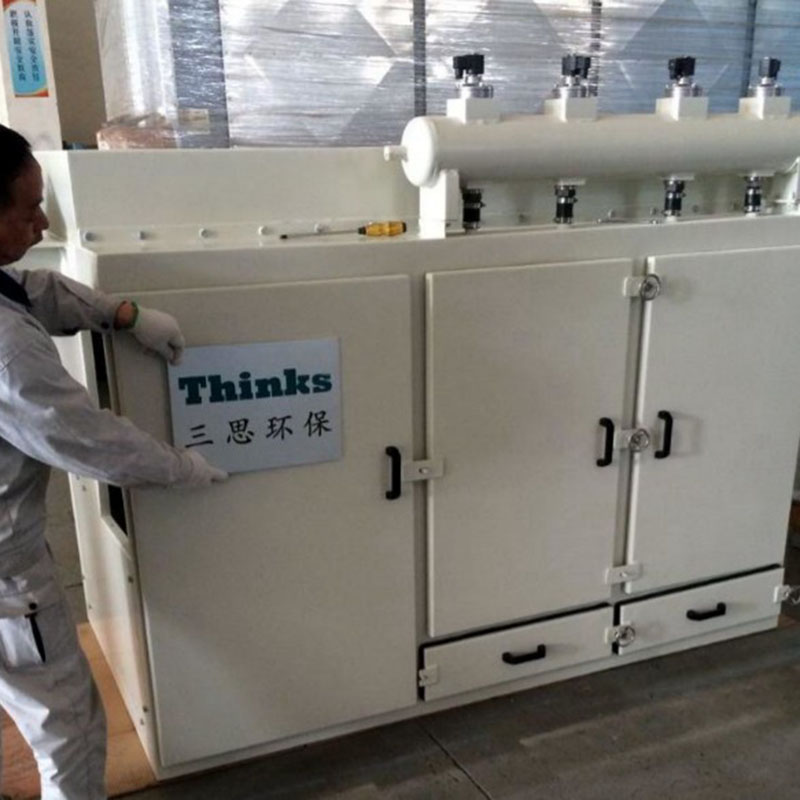 Wholesale TMC Series Cartridge Dust Collector Manufacturer, Factory Changzhou Thinks Environmental Technology Co., Ltd is China Wholesale TMC Series Cartridge Dust Collector Manufacturer and OEM/ODM Factor... View Product →
 Explosion-Proof Wet Collectors
For combustible metal dust and reactive powders, a wet collector is a fundamentally safer choice. Water captures the dust before it can accumulate into a dry filter bed, so the dust never becomes a fuel source for an explosion. The TVC series explosion-proof wet dust collector is designed for precisely this role, and it is commonly specified in aluminum and magnesium finishing operations.
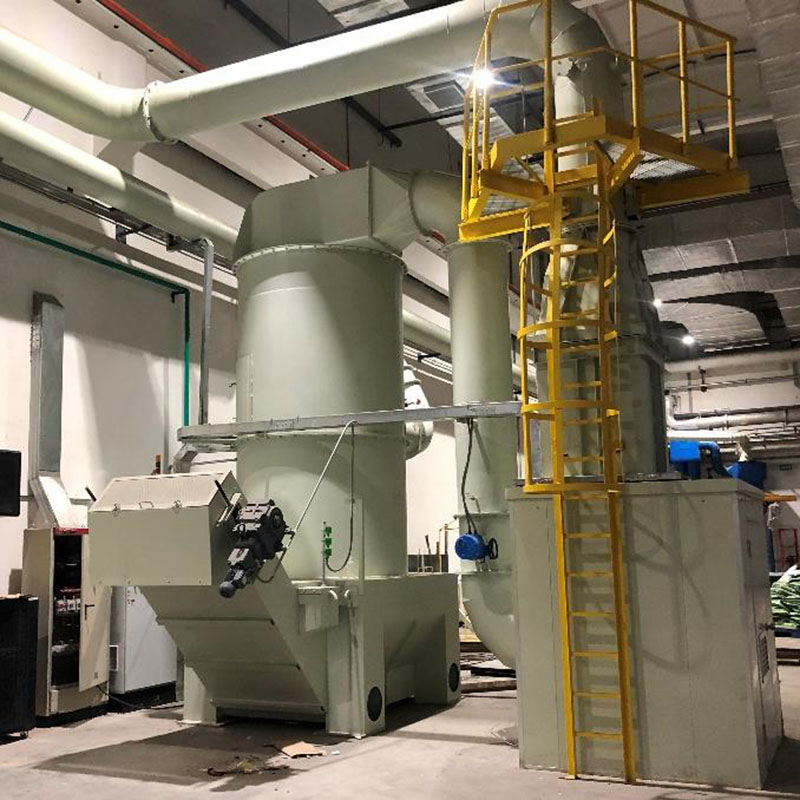 Wholesale TVC Series Explosion-Proof Wet Dust Collector Manufacturer, Factory Changzhou Thinks Environmental Technology Co., Ltd is China Wholesale TVC Series Explosion-Proof Wet Dust Collector Manufacturer and OEM/... View Product →
 Oil Mist and High-Vacuum Systems
Oil mist processors handle the aerosolized cutting fluids and lubricants produced in CNC machining and metalworking. A standard dry collector would quickly be blinded by the sticky residue, while a coalescing oil mist collector keeps the air moving and protects worker health. For general plant housekeeping, a THC series high-vacuum dust removal system is used to clean floors, beams, and equipment surfaces, preventing fugitive dust from becoming a secondary explosion risk.
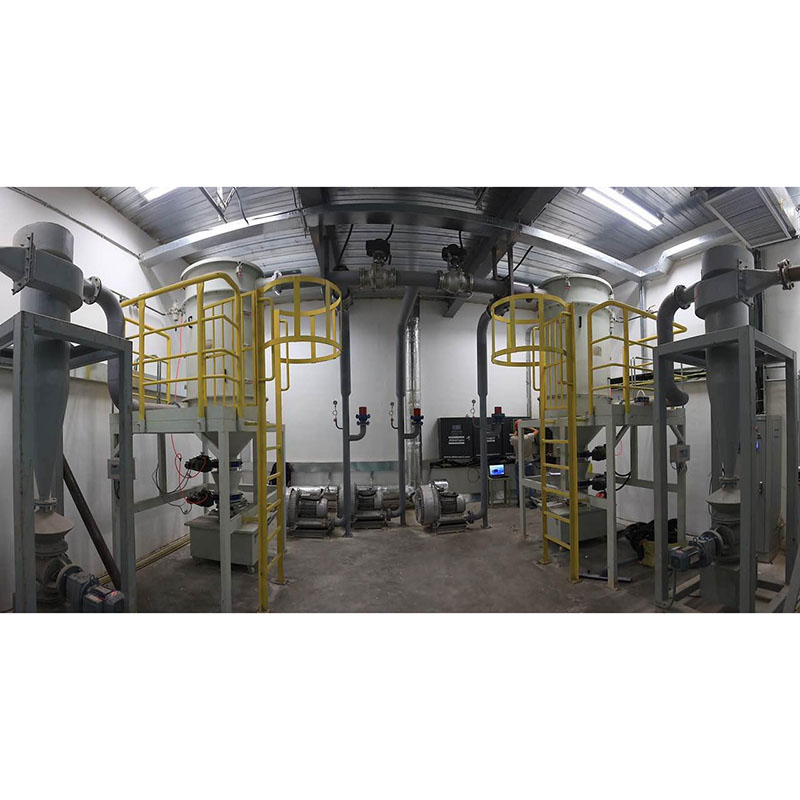 Wholesale THV Series High Vacuum Dust Removal System Manufacturer, Factory Changzhou Thinks Environmental Technology Co., Ltd is China Wholesale THV Series High Vacuum Dust Removal System Manufacturer and OEM/ODM... View Product →
 | Dust condition | Common source | Typical collector | Key design consideration |
|---|---|---|---|
| Dry, coarse particulate | Wood sanding, composite cutting | Baghouse or cartridge collector | Abrasion resistance and hopper discharge |
| Fine or fibrous dust | Welding fume, thermal spray | Cartridge collector | Filter media area and pulse cleaning |
| Combustible metal dust | Aluminum, titanium, magnesium | Explosion-proof wet scrubber | Wet separation and sludge handling |
| Oil mist and sticky particulates | CNC machining, metalworking | Oil mist processor | Coalescing media and mist drain |
| Fugitive housekeeping dust | Floor and overhead deposits | High-vacuum removal system | Portable pickup points and filter regeneration |
Engineering and Safety Considerations That Are Easy to Overlook
Even with the right collector, the duct network and mechanical settings determine whether the system performs.
First, each capture hood must generate enough face velocity to pull contaminants into the system before they escape into the breathing zone. Design references list target velocities for grinding, welding, and sanding; too low a velocity means fugitive dust, while too high a velocity wastes energy and accelerates duct wear.
Second, duct velocity must keep particles from settling horizontally. A typical reference range is 18 to 20 m/s for dry dust, with heavier or sticky material requiring a higher velocity. Excessively high velocity, however, erodes elbows, so the balance between transport and abrasion takes engineering judgment.
Third, the fan must provide enough static pressure to overcome the resistance of the network and the filter. A common mistake is to size the fan only for clean filter conditions. As the dust cake builds, the filter resistance rises; pulse-jet cleaning timers and differential pressure limits are part of keeping the system stable. A structured maintenance checklist is essential because a leaking rotary valve or worn diaphragm will quickly undercut performance. For a practical audit starting point, review the key maintenance considerations for industrial baghouses .
Safety is the fourth layer. Combustible dust standards such as NFPA 652 in the United States and ATEX in Europe require a hazard analysis before installation. Depending on the dust, the system may need explosion venting, isolation valves, spark detection, or suppression. A spark catcher before the filter and a clean hopper are low-cost defenses that prevent a minor event from becoming a serious incident.
Where Dust Collection Systems Are Put to Work
Dust collection is not generic across industries. The dust itself dictates the design.
- Foundry and casting: sand dust, metal dust, and high temperatures require a filter with pre-separation or air cooling. Foundry dust collection solutions are matched to specific steps like melting, shakeout, and finishing.
- Chemical processing: fine, sometimes reactive powders demand careful hopper discharge and possibly inert gas protection. Beyond dust, chemical plants often need dust and VOC control for chemical plants , including adsorption and catalytic systems.
- Steel plants: hot flue gas and heavy dust loads call for high-temperature filter media and robust ducting.
- Nonferrous metal processing: fine metal dust is often a combustion risk, making wet collection or strict explosion protection necessary.
The process before the collector determines the entire system design. That is why an equipment catalog alone is not enough; the supplier must understand where the dust comes from and how the process changes during operation.
How to Approach Your Next Dust Collection Project
A dust collection system is a capital investment with a long service life, so buying decisions should focus on lifetime performance rather than the initial quote.
Start by characterizing the dust: particle size distribution, moisture, temperature, explosibility, and abrasiveness. Then design the capture and transport network together with the collector. If your team is not experienced in duct design, work with a supplier that offers engineering support, a manufacturing base, and installation service. The right partner can take responsibility for matching the collector to the ductwork and the process, reducing the risk of field modifications during startup.
When evaluating suppliers, ask about commissioning procedures, spare parts policy, maintenance training, and project references. The need for domestic support is obvious, but overseas project experience is also useful if your company operates across multiple sites or plans future expansion.
Final Thoughts on System Reliability
The best dust collection system is one that operates without constant attention. It captures dust at the source, keeps the filter clean, and runs at a steady differential pressure. To get to that point, you need more than a collector. You need a system designed around your process, your dust, and your safety requirements.